Enso Studio
An interactive virtual studio for 3D audio
A graduate thesis project at Yıldız Technical University — a real-time, first-person virtual studio for learning and working with spatial, Dolby Atmos-style music production.
Purpose
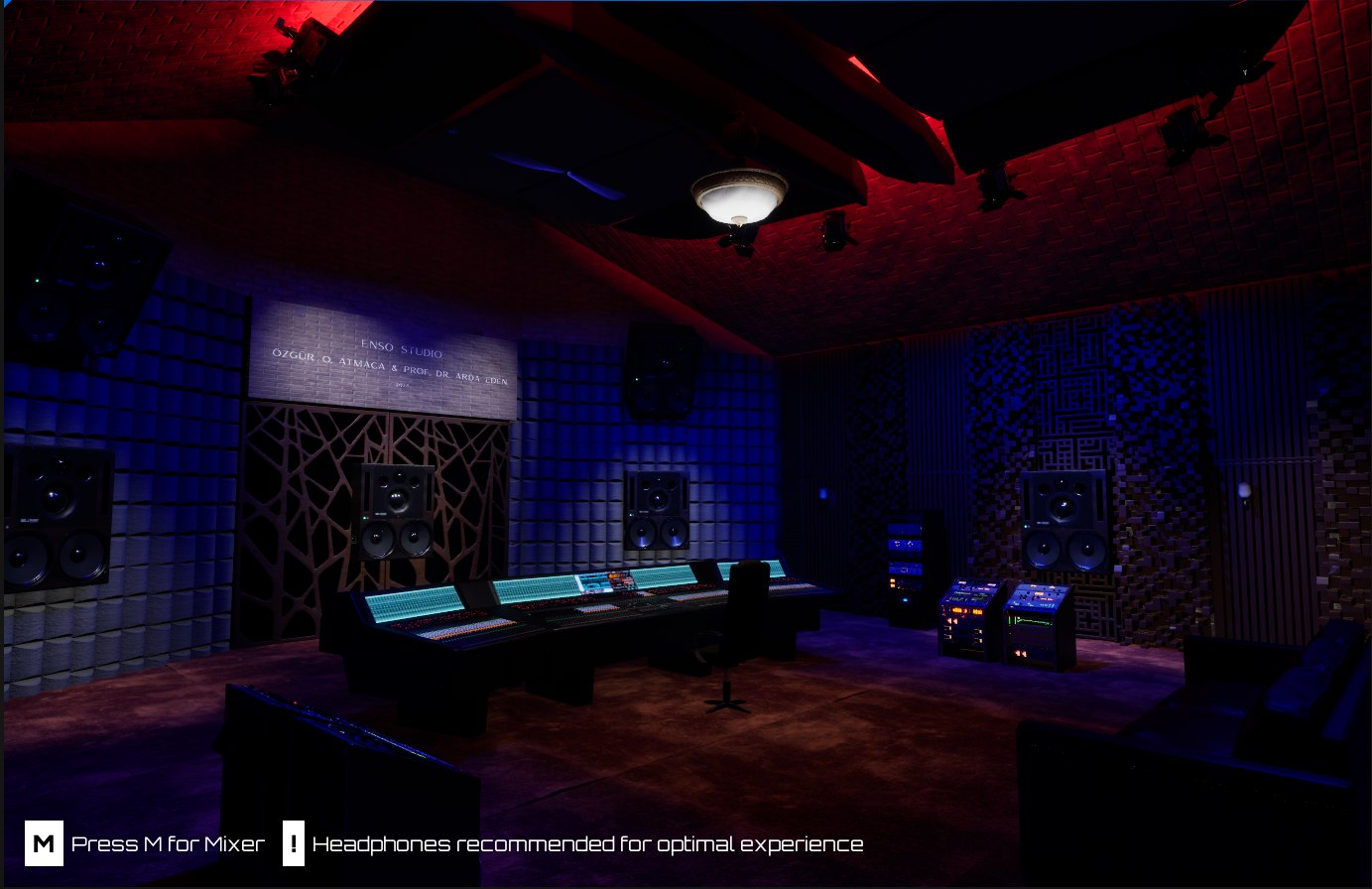
Enso Studio is a first-person, real-time 3D audio studio built in Unreal Engine. A user moves through a virtual control room, operates a simplified channel mixer, and — over stereo headphones — experiences what it feels like to sit inside a spatial (Dolby Atmos-style) mix room.
Why it matters
Three-dimensional mixing has real, practical barriers: the hardware, the acoustically-treated room, and the technical training it demands put it out of reach for most independent producers and students. Enso Studio makes the experience and the underlying theory of 3D audio production accessible through an interactive virtual environment instead — and offers a low-stakes space to learn in before ever touching a physical Atmos room.
The problem
Cost
A compliant Dolby Atmos room needs at minimum six matched monitors, multichannel converters, calibration tooling and a space built to Dolby's volume and dimension specs — a high bar for most studios.
Technical knowledge & training
3D mixing is a different discipline from stereo. Most working engineers, and most music-technology programs, still only get to cover it in theory.
Listening habits & marketing
Without access to a 3D system, its creative benefits are hard to grasp firsthand — and most listeners still default to stereo.
Creative control
Without post-production access to a 3D room, musicians and engineers lose the ability to make informed creative decisions about how a spatial mix will actually be heard.
Binaural rendering limits
Existing DAW binaural renderers don't yet give headphone listeners a strong enough sense of physically being inside the 3D space.
From blockout to build
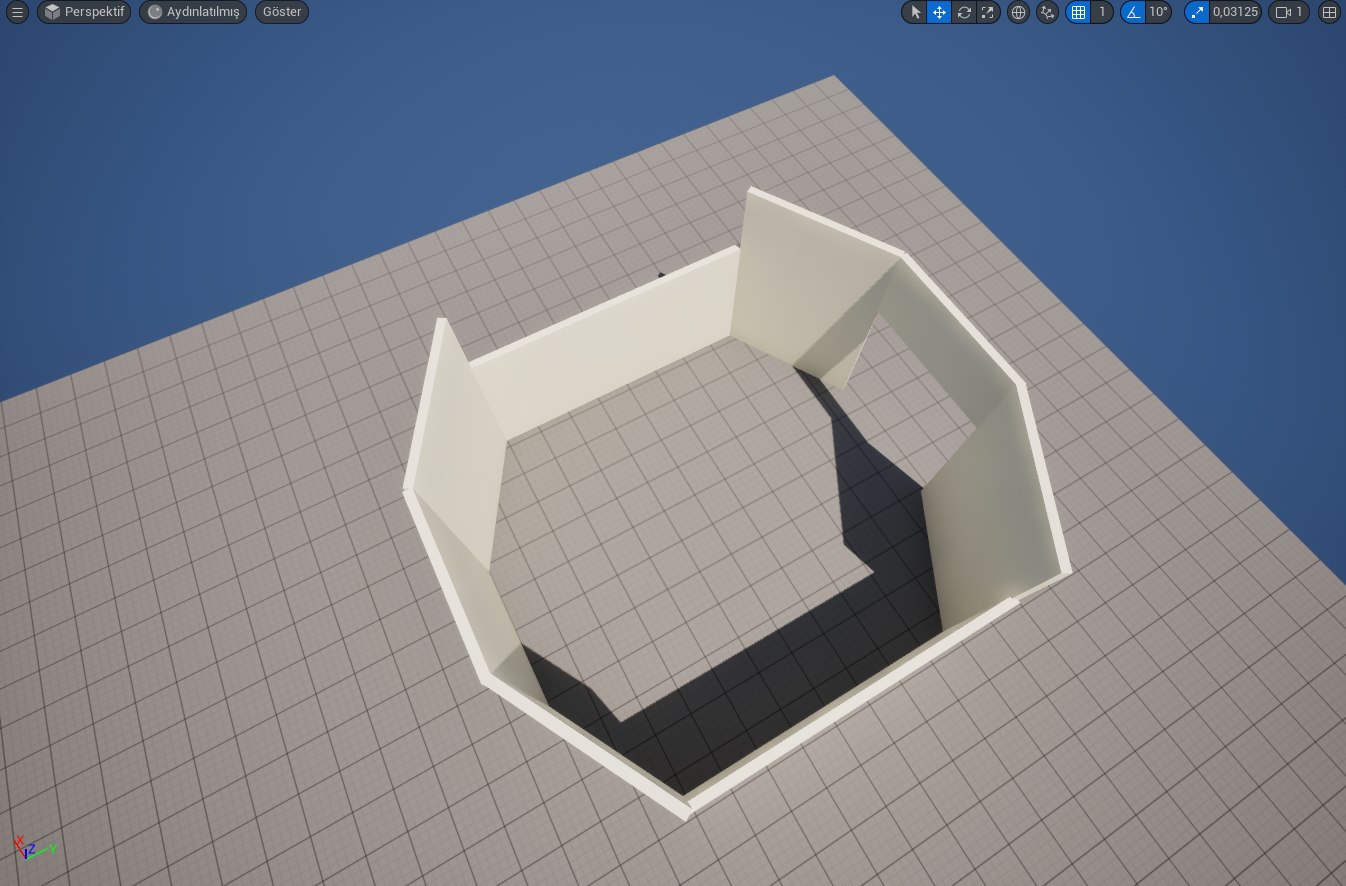
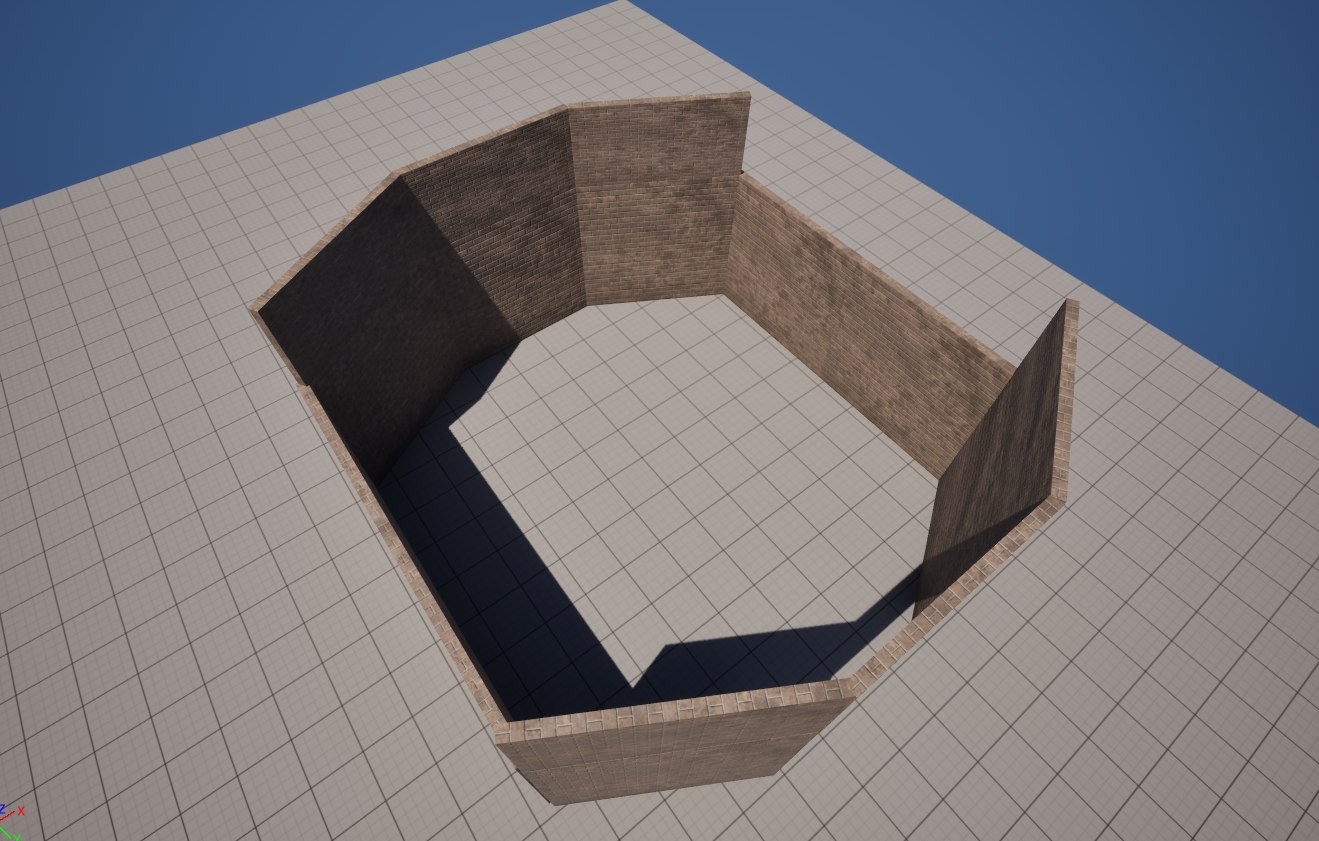
The room was designed from scratch — an octagonal plan, roughly 45m² with a 3.5-meter ceiling, built from eight 400×400 wall panels joined into blocks. The octagon wasn't a stylistic choice: it's the shape that let every speaker sit at an equal distance and the correct angle from the listening position at ear level. Once the shape was locked, wall surfaces and materials from Unreal Engine's own architectural mesh library were used to dress the room.
The corridor
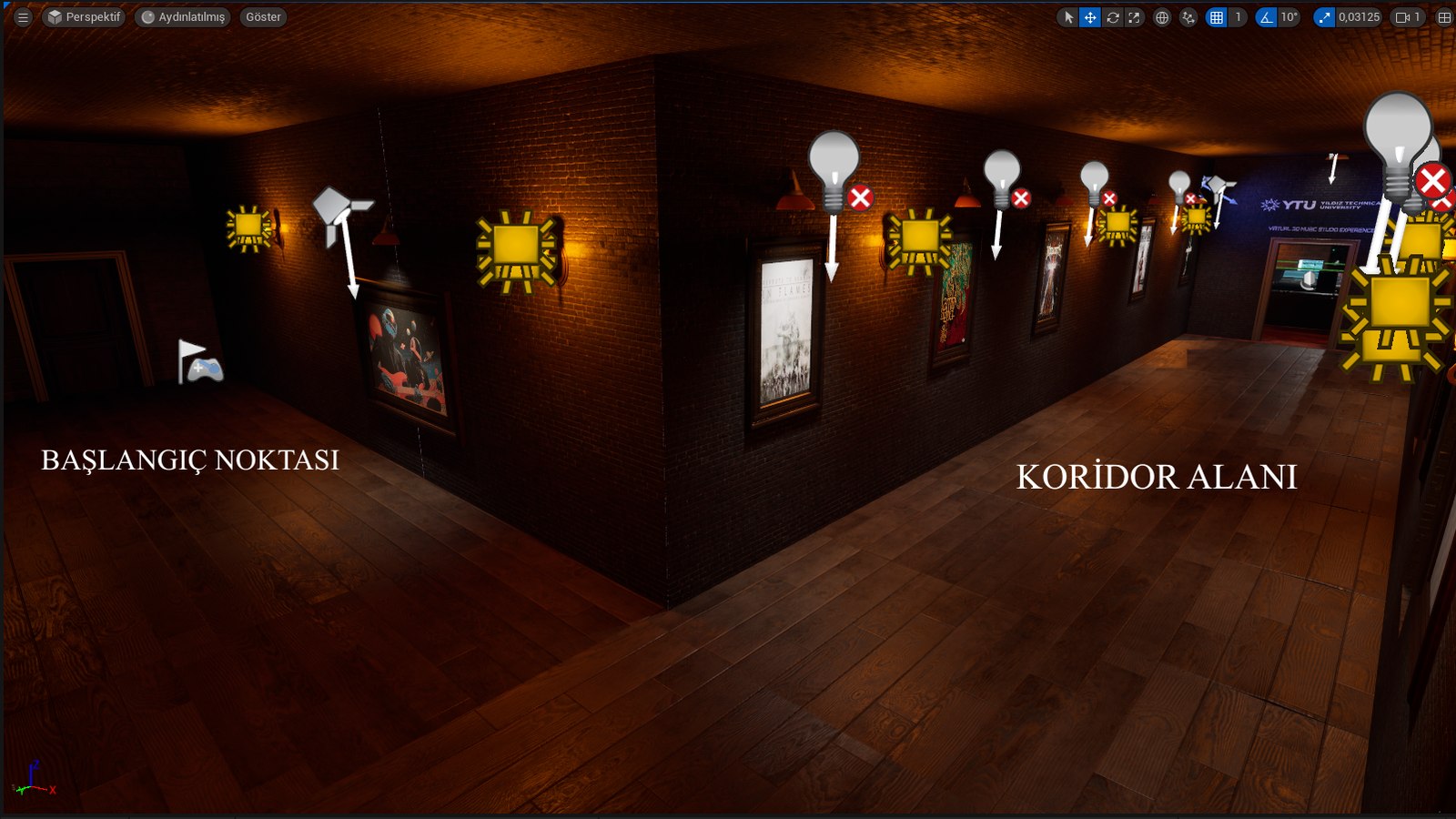
Before reaching the control room, a user walks a roughly 10-meter, L-shaped corridor — designed as more than a hallway. Window openings and album-cover artwork line its walls specifically to pull a user's attention and encourage them to turn their head as they walk, so the directional cues built into the room register before they've even sat down. Its length is deliberate too: long enough to make distance-based volume change — quieter as you enter, louder as you approach the room — clearly felt rather than just implied.
Designing the sweet spot
Inside the control room, a fixed reference listening position — the sweet spot — anchors the whole design: all eleven virtual speakers are placed and calibrated around it, exactly as they would be in a physical room, down to a virtual chair marking where a user sits to reach it.
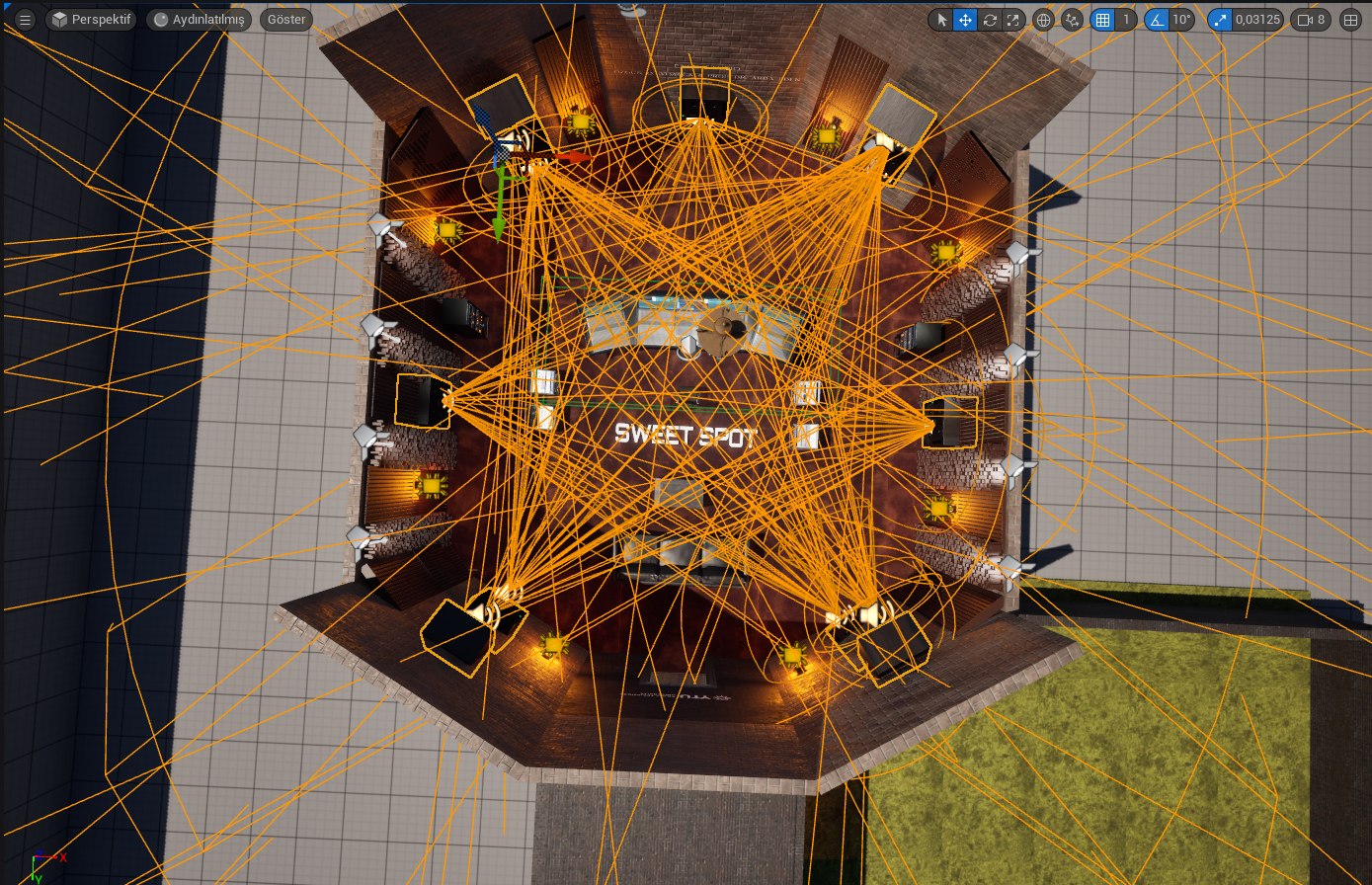
Modeling how sound falls off
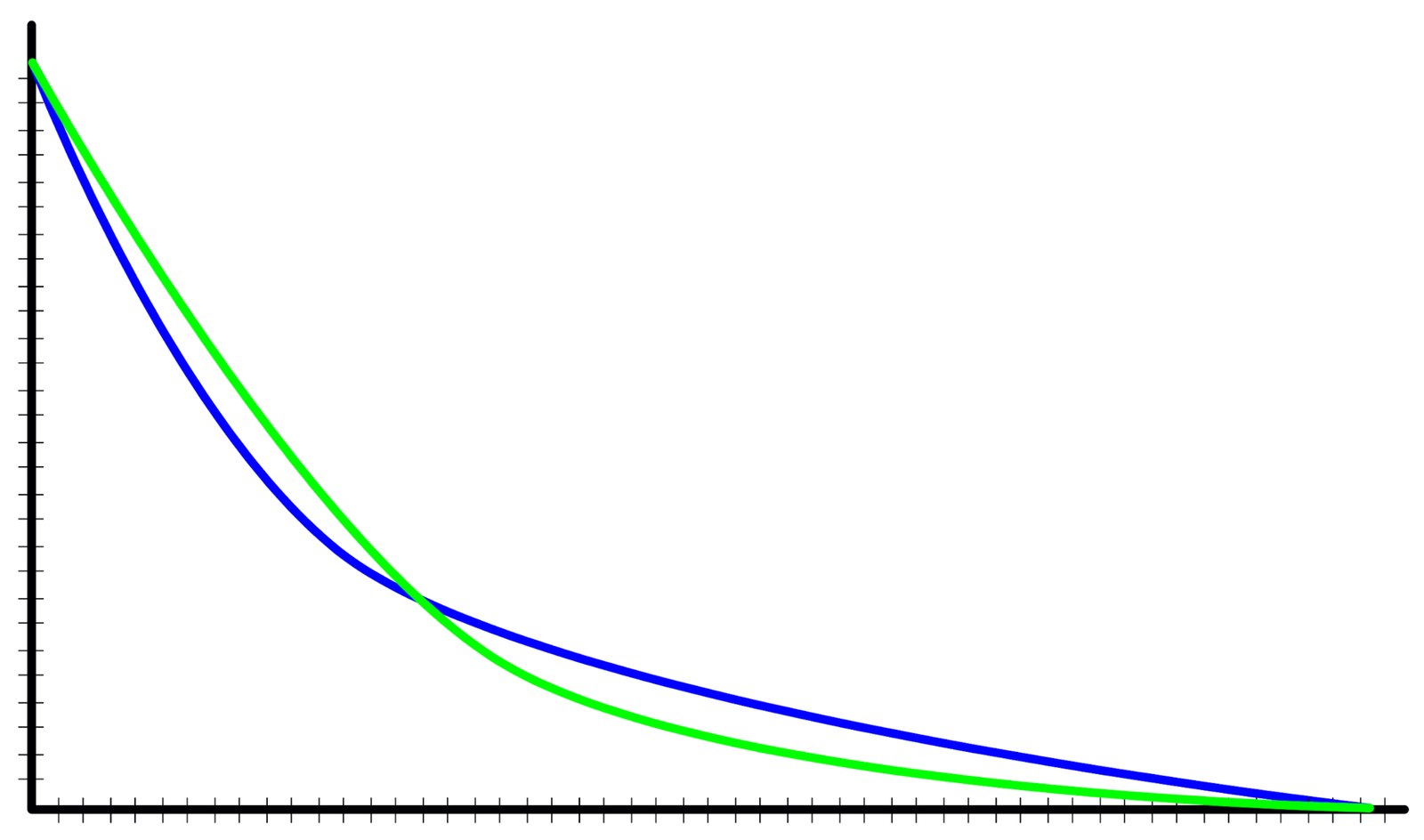
Each speaker's distance-based volume falloff is driven by a custom "natural" attenuation function — a blend of logarithmic and inverse falloff curves, chosen over Unreal Engine's default shapes because it made distance-based loudness change more perceptible to a listener moving through the room. Every speaker was tuned to this curve individually before the full 3D sound field was assembled.
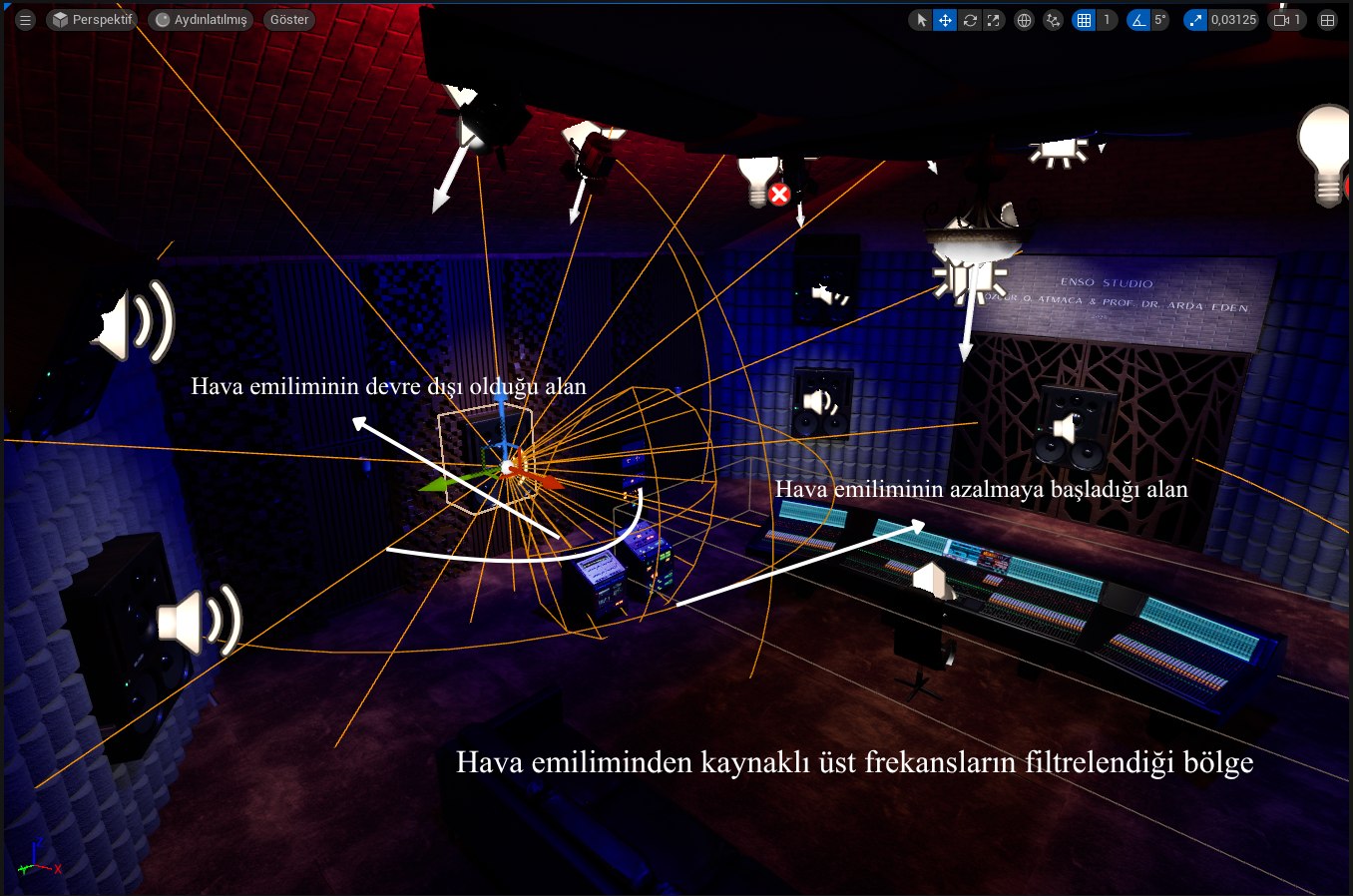
Modeling air absorption
Distance doesn't just lower volume — it filters tone, too: high frequencies lose energy to the air faster than low ones. Because the shortest audible wavelengths (down to about 1.7cm at 20kHz) are the most sensitive to that filtering, even a 50cm–1m step toward a speaker can be audibly felt on cymbal-range material. Each speaker's cone models three zones — where air absorption is inactive, where it starts to kick in, and where high frequencies are progressively filtered out — so that walking through the room changes not just how loud each speaker is, but how bright it sounds.
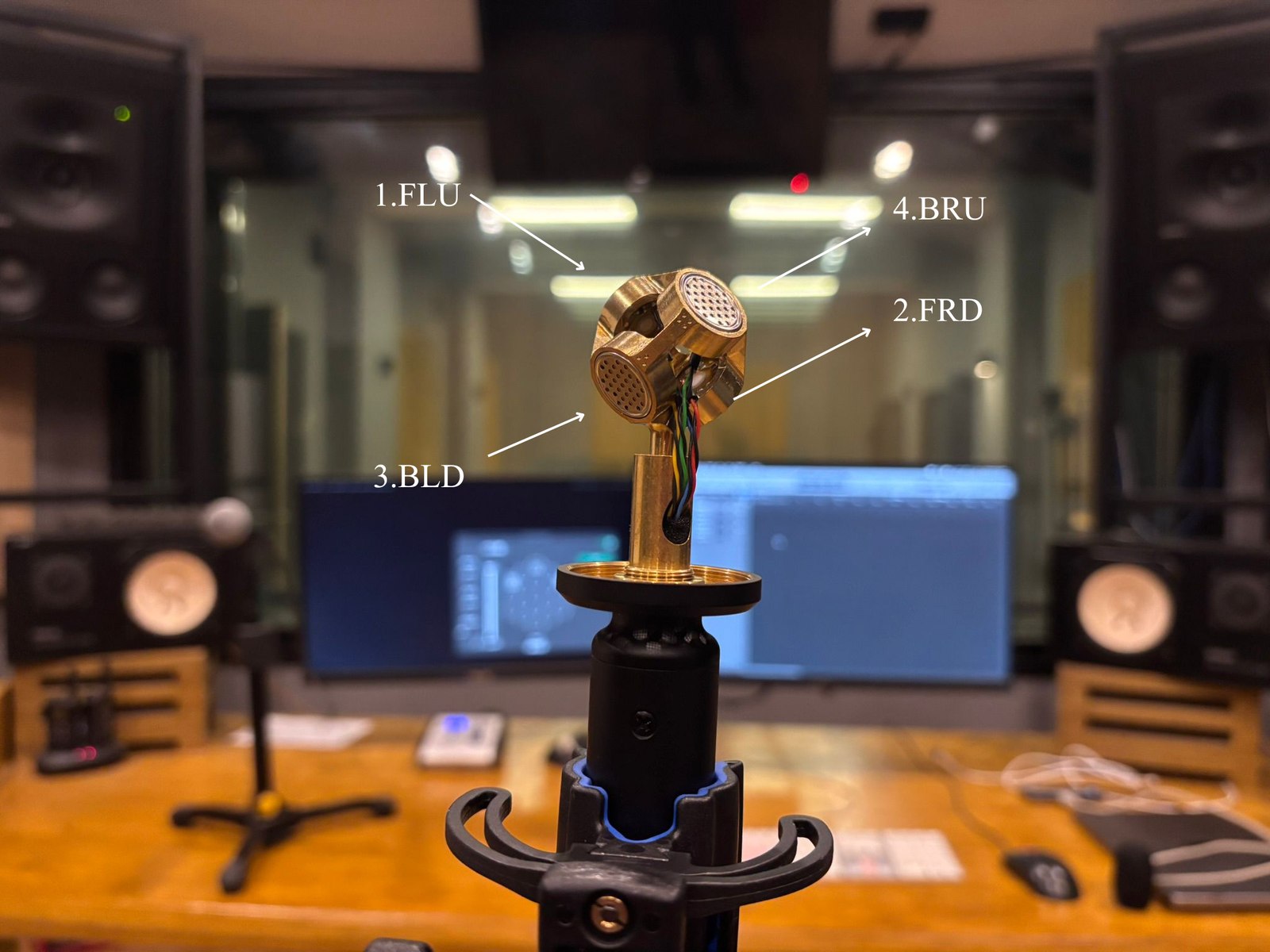
Recording real ambience
The room tone bed under the whole experience isn't synthesized — it's a real ambisonic recording, captured with a Sennheiser Ambeo VR mic's four tetrahedral capsules (FLU, FRD, BLD, BRU), run through a Millenia HV-3D preamp and converted from A-format to B-format for use as a constant, non-attenuating ambient layer in the scene.
Building the mixer
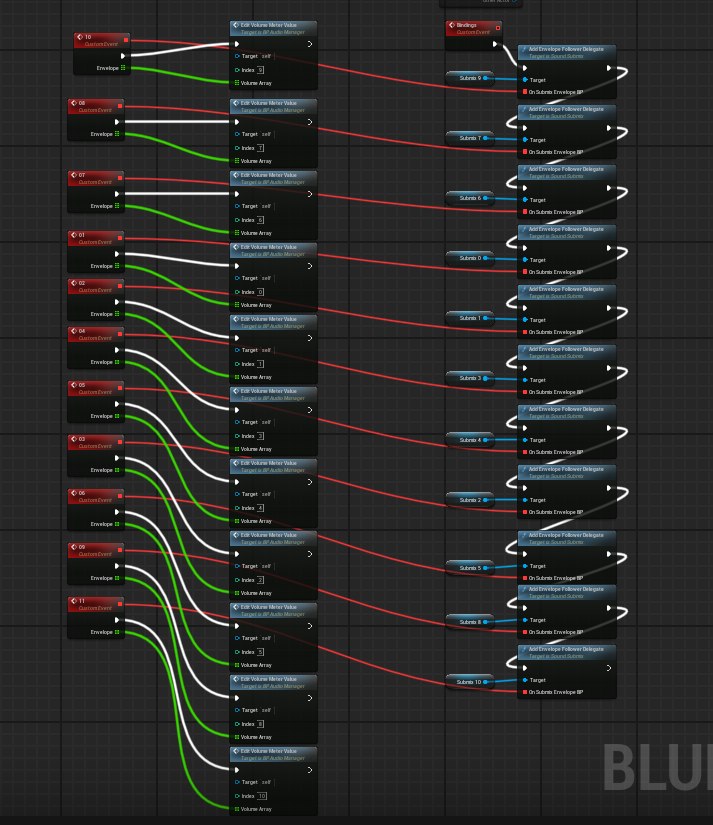
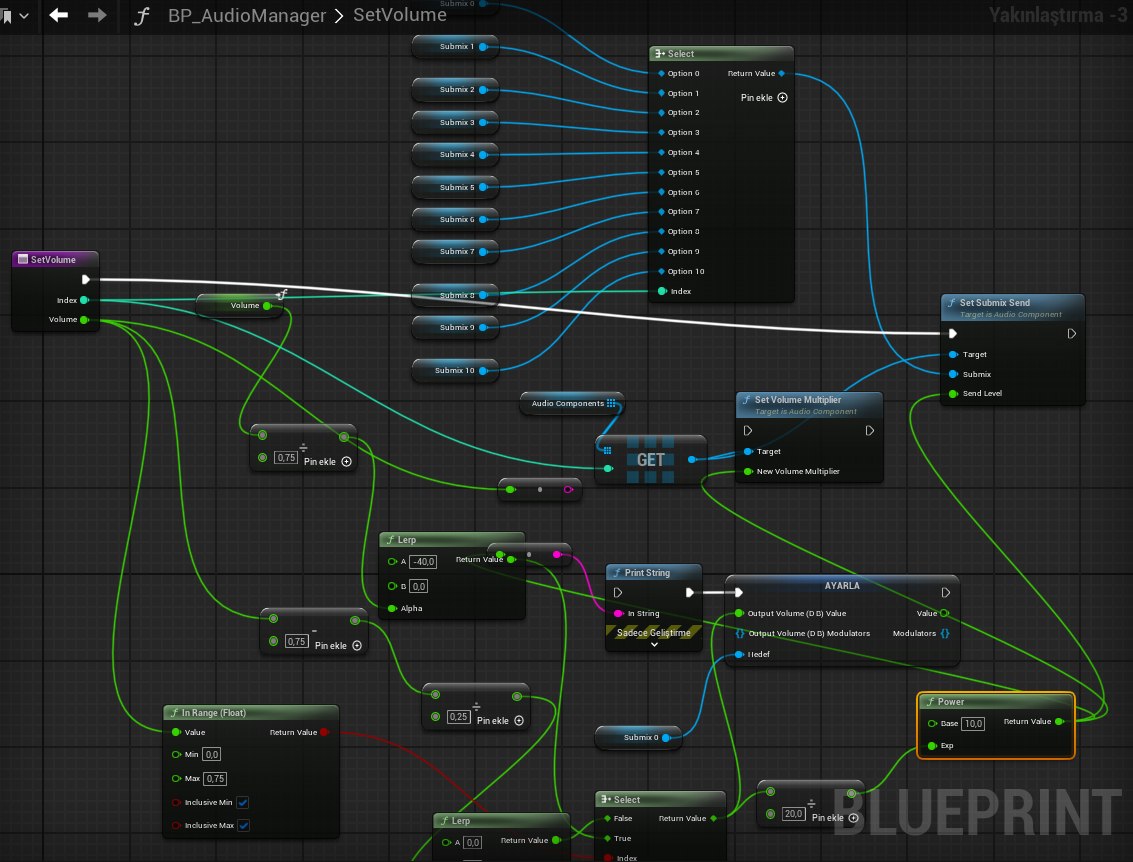
Each of the 11 speakers plays its own Unreal Engine sound submix, so the mixer's software has to track and control 11 channels independently. An Envelope Follower Delegate on every submix reports its real-time level back to the interface, so the on-screen meters reflect what's actually playing at each speaker. Moving a fader calls a SetVolume function that maps fader position to decibels through a pair of Lerp curves — modeled so the fader's center sits at 0dB (unity gain) and its bottom reaches -40dB, the same behavior as a real digital mixer.
Testing with real engineers
Enso Studio was tested with a group made up mostly of working audio professionals, not just students — composers, sound designers and engineers.
One participant — an artist-relations executive at Warner Music — pointed to a real gap it addresses: artists releasing Dolby Atmos music without ever having had proper access to hear it in a true spatial room.
Taken together
Taken together, Enso Studio is a simulation that runs on nothing more than a computer and a stereo headphone — modeling a real studio's room, its speaker array, and its mixer closely enough that the spatial illusion, and the workflow built around it, hold up for people who mix for a living.
Thesis
Interactive Virtual Studio Design for Real-Time Three-Dimensional Audio Production
Yıldız Technical University, Institute of Social Sciences — M.A. in Music and Performing Arts
Advisor: Prof. Dr. Arda Eden · June 2026